As we become orchestrators of agents, we need to engineer their context so we stop repeating ourselves across sessions. The context can come from AGENTS.md (or CLAUDE.md), in-repo documentation, skills, MCP servers or CLI tools.
Often, back-and-forth with agents is not just about the current task, but also how you want things done. For instance, I spent an hour iterating on a design for a new feature. The agent created a markdown design doc, but the session also included guidance that applies to other sessions.
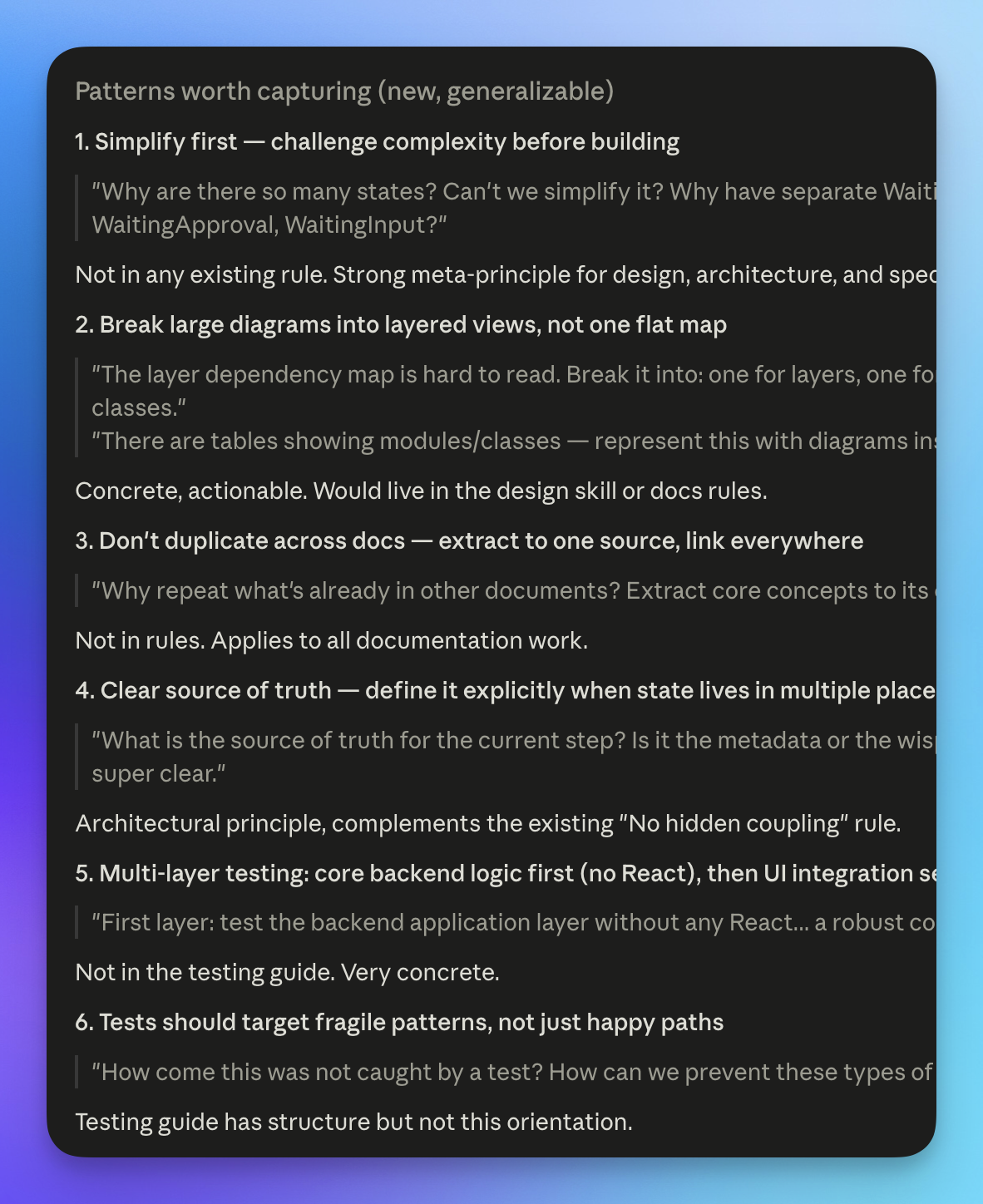
Here are some examples:
- Try to simplify the design
- Don’t repeat what’s in other docs, link instead
- Create mermaid class diagrams with namespaces
I used to capture these manually by asking the agent to extract learnings from a session and update relevant in-repo documentation or skills. I typically did this for feedback-heavy sessions.
Now I go further. I ask the agent to review sessions in the last N days, flag reusable feedback, and propose where it belongs in docs or skills. I review the proposal before asking the agent to implement it. I’ve created a ‘dream’ skill that does this on a weekly schedule.
Making agents more effective isn’t about chasing the latest model. It’s about systematizing the feedback you’re already giving and turning session learnings into persistent context.